Featured
Critical Minerals: Global Tellurium Supply and Demand
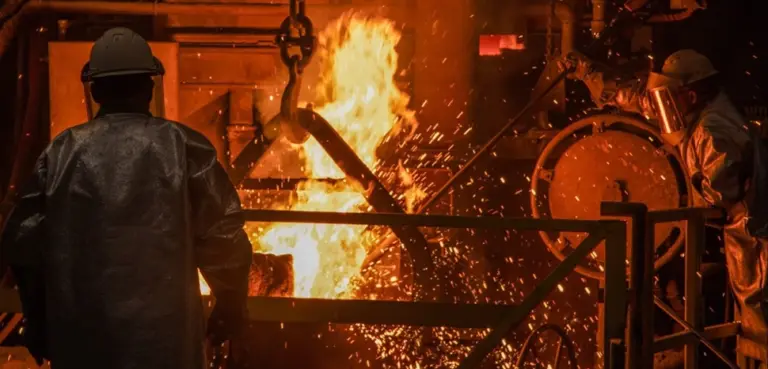
Tellurium represents a critical minerals paradox. On one hand, it accounts for a relatively small global market and tends to be understated in quantitative risk modeling. On the other, it remains a critical input in solar and defense supply chains and is subject to export restrictions from China, which remains the dominant force in global tellurium production.
Latest Stories
The Iran War: Attack on Thirsty Nation
Water infrastructure has emerged as a strategic target in the Iran war, signaling a possible trend for future conflicts.
What Iran’s Latest Strike Reveals About Its Evolving Deterrence Strategy
New strikes on Israel show how the line between attacks on Iran and attacks on Iran’s strategic ecosystem is becoming blurred, resulting in new risks, new calculations, and a more complex regional security environment going forward.
“Hormuz Safe”: Iran’s Fifth Layer of Maritime Sovereignty
For Washington, Iran’s “Hormuz Safe” scheme is a dangerous proposition, demonstrating that a sanctioned state can build its own maritime financial infrastructure, bypassing Lloyd's, the dollar, and US sanctions simultaneously.
Escaping Southeast Asia’s Critical Minerals Trap
Critical minerals like nickel and tin may power the next economy, but extraction alone will not secure ASEAN’s place in it. Southeast Asia does not need to become the quarry of the energy transition. It needs to become one of its industrial architects.
Thai-Cambodian Maritime Dispute: From MOU 2001 to UNCLOS Conciliation
The institutional framework governing the Thai-Cambodian maritime dispute collapsed with Bangkok’s recent withdrawal from MOU 44. Here’s what the new process might look like.
DP World’s Brazil-Africa Corridor: Rise of a New South Atlantic Trade Lane?
DP World’s vision of a Brazil-Africa Corridor signals the steady extension of Gulf logistics control into the South Atlantic. But the project, which would alter supply chains for food, energy, and minerals, is far from geopolitically neutral.
Iran War Ceasefire Frays, Taiwan-China South China Sea Standoff, El Niño | Geopolitics Weekly
Pressure mounts on the Iran war ceasefire; Taiwan and China face off at a disputed atoll in the South China Sea; a supercharged El Niño threatens to compound an already dire food security outlook; and the House GOP defies President Trump on the Ukraine war.
Geopolitical Orientation on the Ballot in Armenia Elections
Armenians head to the polls on June 7. The election outcome will affect not just domestic governance, but Armenia’s geopolitical orientation going forward, with consequences for the peace process with Azerbaijan and wider stability across the South Caucasus.
Washington Risks Repeating Israel’s Strategic Mistake in the War of Attrition
The risk faced by the United States in the Strait of Hormuz mirrors Israel’s War of Attrition against Egypt: What presents as a contained skirmish may actually be setting the stage for a future regional war.
How the Ukraine War Reshaped Russia’s Long-Range Strike Capabilities
Russia has re-invented its long-range strike capabilities over the course of the Ukraine war, moving from import dependency and exhausted stockpiles to a domestic production capacity that is now eclipsing NATO.
Washington’s New Terrorist Designations Risks Derailing US-Brazil Relations
A US terrorist designation of two major Brazilian organized crime outfits is not a matter of law enforcement - it’s a geopolitical weapon, speak nothing of a compliance nightmare for regional banks, and it will reverberate across US-Brazilian relations for years to come.
Uneven Playing Field: Mexico, Iran, and the Geopolitics of the World Cup
The World Cup has afforded space for Mexico’s President Sheinbaum to play a constructive role in defusing Middle East tensions, but asymmetric realities will make it hard to repeat the trick on Cuba or the cartels.
Southeast Asia’s Quiet Verdict on US Power
Southeast Asia is not moving towards China. It is moving away from US dependence.
The Geopolitics of Geo-Engineering: Weather Warfare vs. Climate Security
Geoengineering risks transforming the climate itself into an arena of geopolitical competition, where the atmosphere, sunlight, and weather systems become objects of strategic control.
Inflate Away the Debt? Strategic Logic and Risks of a Weak Dollar Regime
Mounting debt burdens are narrowing Washington’s fiscal space and eroding confidence in the US dollar’s reserve currency status. However, history shows that severe fiscal conditions can be reversed; and if not, the more likely outcome is a gradual erosion of confidence in USD assets, not an abrupt collapse.
Geopolitical Dimensions of Forced Labor Governance
Global labor governance is fracturing, leaving manufacturers caught between competing legal systems that, in effect, force them to choose between maintaining access to the Chinese input networks or Western markets.
Geopolitics Weekly (Iran War Deal, DRC Ebola Outbreak, Quad Revived)
Examining the latest diplomatic efforts to hammer out a framework deal in the Iran war, signs that the Ebola outbreak in central Africa is worse than the data reflects, and the tentative return of the Quad as a player in the Indo-Pacific security architecture.
A Hard Offer to Refuse: Ukraine’s Strategic Pitch to a Middle East in Flux
Russia’s support for its Iranian ally imperils years of economic and diplomatic engagement with Gulf states. Ukraine has taken advantage of this contradiction, offering Gulf states no-strings-attached operational expertise against a weapon that Kyiv knows too well. The resulting erosion of Russia’s footprint in the Middle East will resonate for years, if not decades to come.
Lessons Forgotten: Critical Minerals and Partisan Ideology in the U.S.
Administrations from both sides of the aisle have left US critical minerals supply chains highly vulnerable amid a return to great power politics. But stockpiling initiatives like ‘Project Vault’ suggest that Washington is beginning to remember the old truism that economics and geopolitics are inseparable.
From Crisis to Opportunity: How China Quietly Gains from the Iran War
The Iran war is opening strategic avenues for China to strengthen its international and domestic position in a disrupted world order.